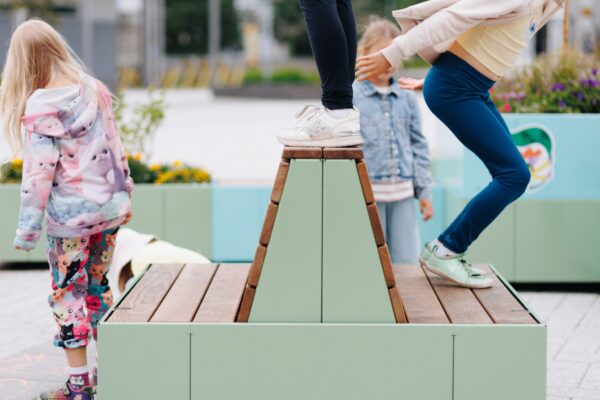
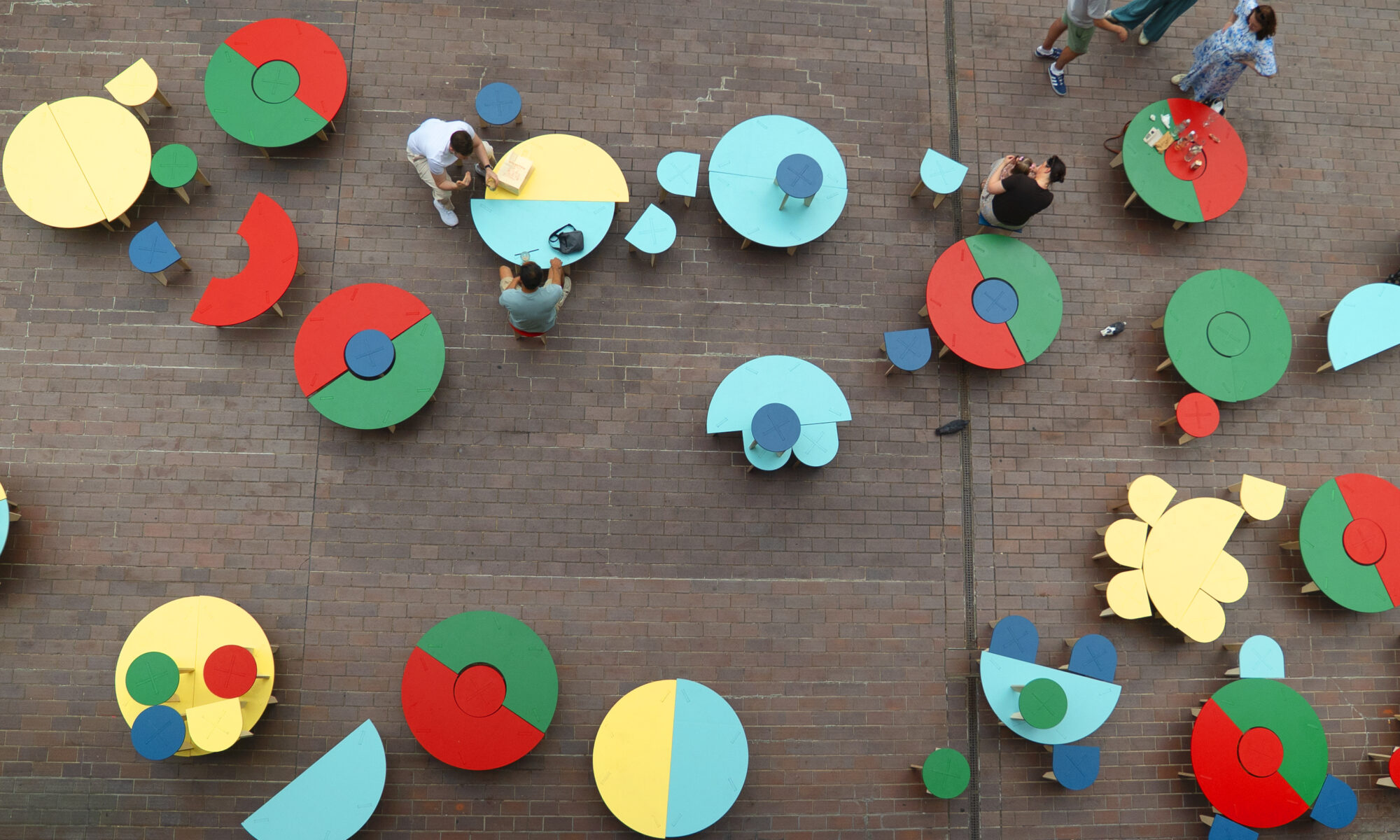
A range of shapes and colours invites participants to rearrange, combine and engage with the elements, creating evolving forms, functions and meanings through both spontaneous and intentional interaction.
Basic Forms (of Urban Life) is an interactive public art installation by artist and designer Päivi Raivio of RaivioBumann. The work challenges conventional approaches to urban design by introducing disruption, play and a degree of disorder into public space.
The first edition of Basic Forms (of Urban Life) was presented in Logroño as part of the Concéntrico Design and Architecture Festival. The second edition was presented at the Barbican Centre in 2026 as part of the Play Make Do festival, in partnership with and commissioned by the Finnish Institute in the UK and Ireland.
The installation explores how simple prompts invite us to play at any age. Its forms are designed to encourage interaction, improvisation and shared moments in public space. The colours and shapes draw inspiration from the architectural details of the Barbican, echoing elements of its distinctive architecture while inviting people to reinterpret and play with them.
I believe play and playfulness are among the most powerful ways to explore our relationship with each other and the places around us. They allow us to reimagine our cities and bring forward aspects of human nature that rarely have space to flourish in the built environment: curiosity, spontaneity, and activation without a ‘greater’ purpose. Playfulness is also a way to make more room for children in the city. Working at the Barbican has been a real honour for me. It is such an iconic place, and I’ve loved the opportunity to explore play within its architecture -discovering how play can transform the place, bring movement, spontaneous joy and connections that emerge through the work.
Päivi Raivio
Installation Themes
Disruption & Flexibility:
Challenging rigid urban spaces and built environments while allowing spontaneous, playful rearrangements. Inviting play, disorder and creativity.
Place Activation:
The installation comes alive when people interact – sitting, playing, socialising leaving behind spontaneous patterns and shapes.
Basic Urban Life:
Highlighting essential urban experiences, rest, connection, play, that often get constrained in standard city settings.
Design Democracy:
Emphasising that public space should be shaped by people; celebrating unpredictable, disorderly and human-centered use. The simple shapes invite people to connect, rearrange, and play with them in multiple ways, while also serving as elements that foster gathering, play, and togetherness.
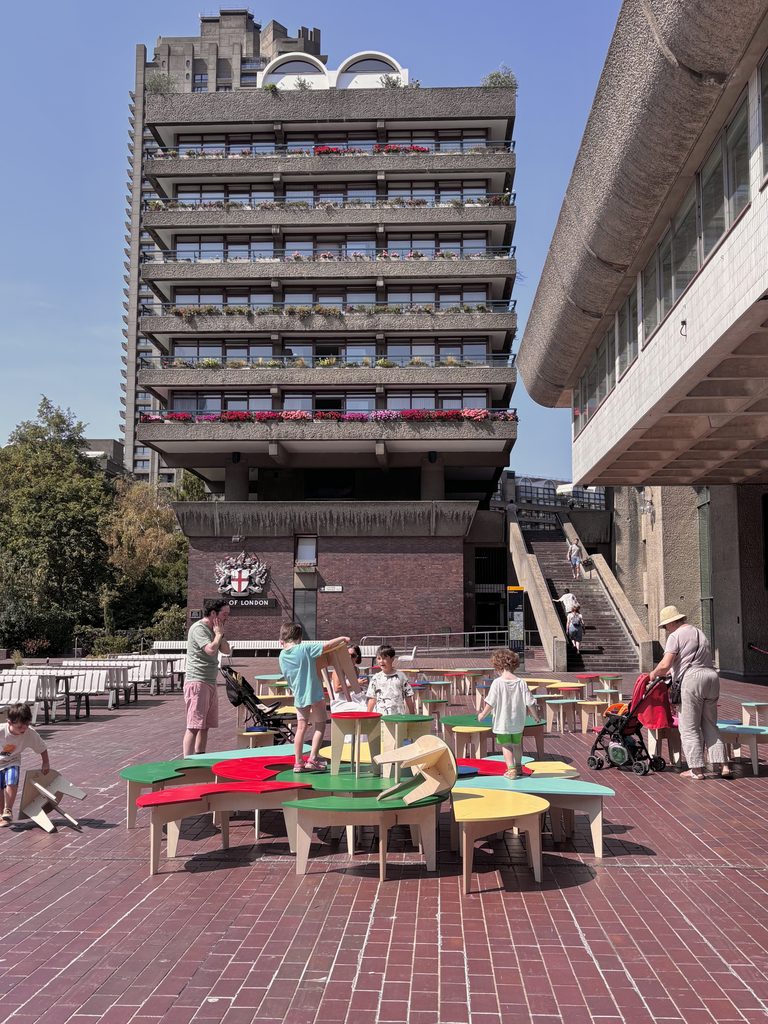
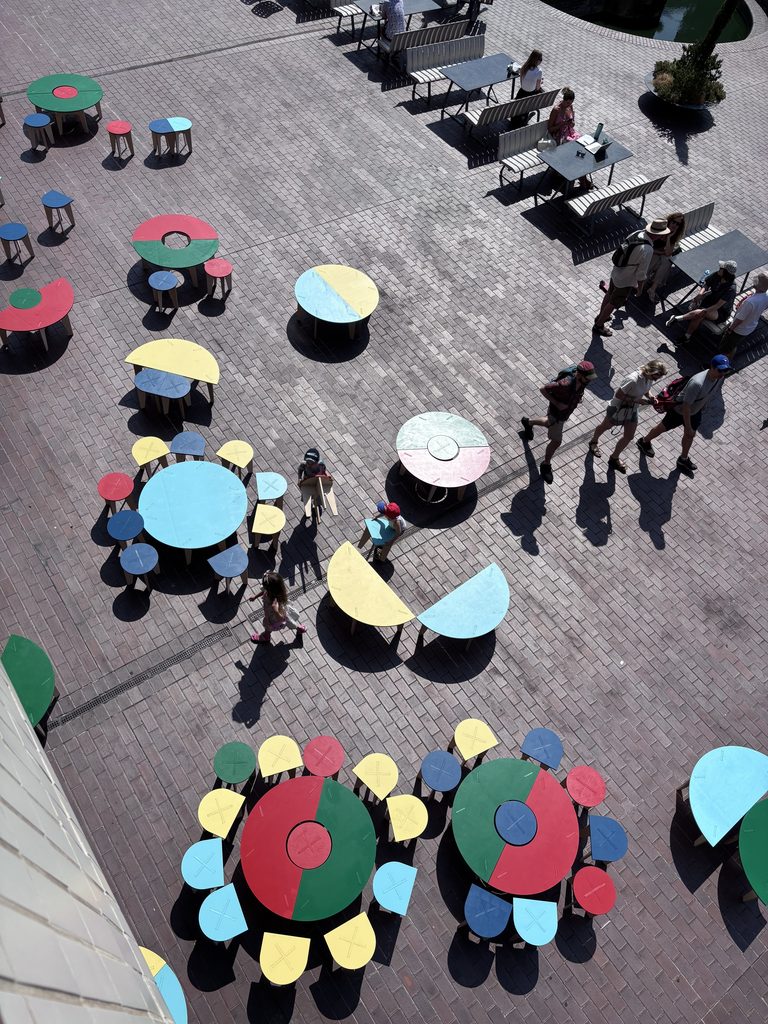
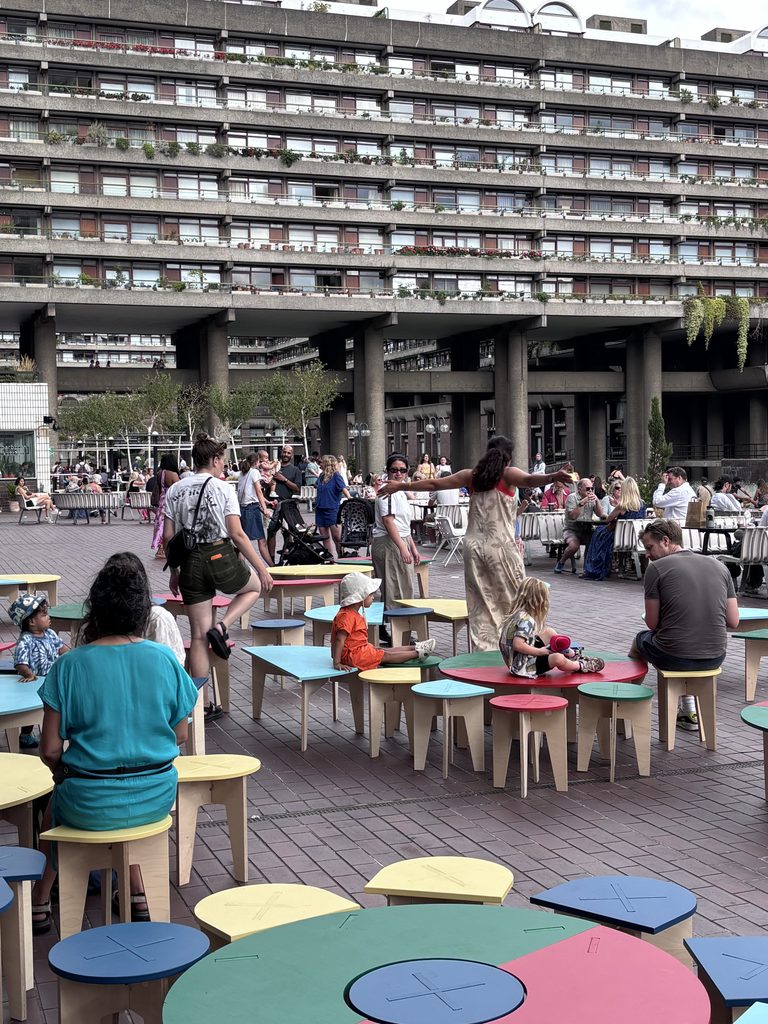
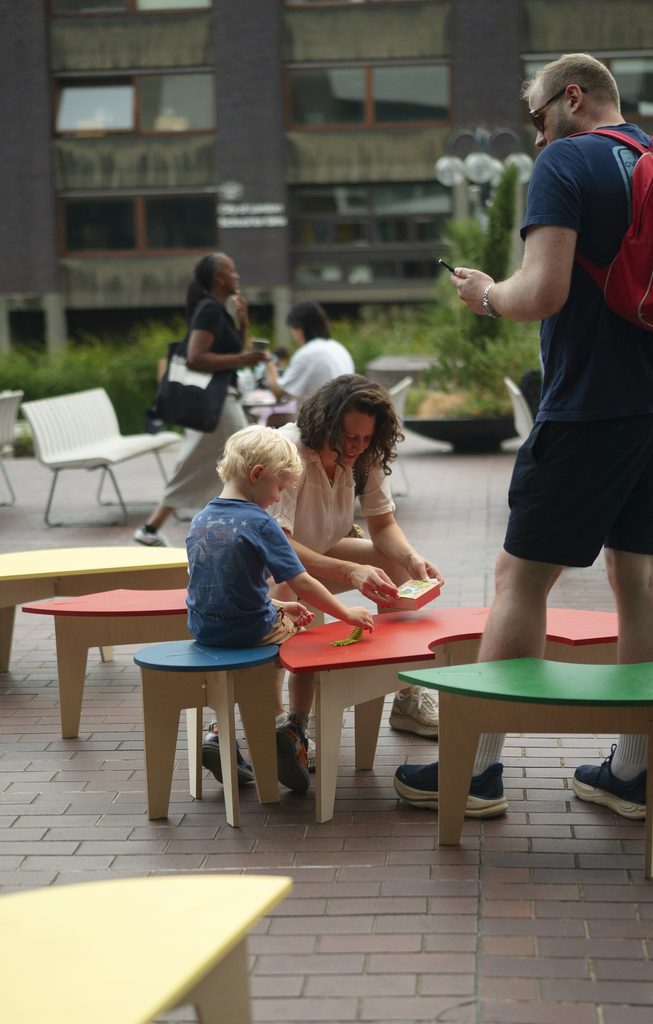
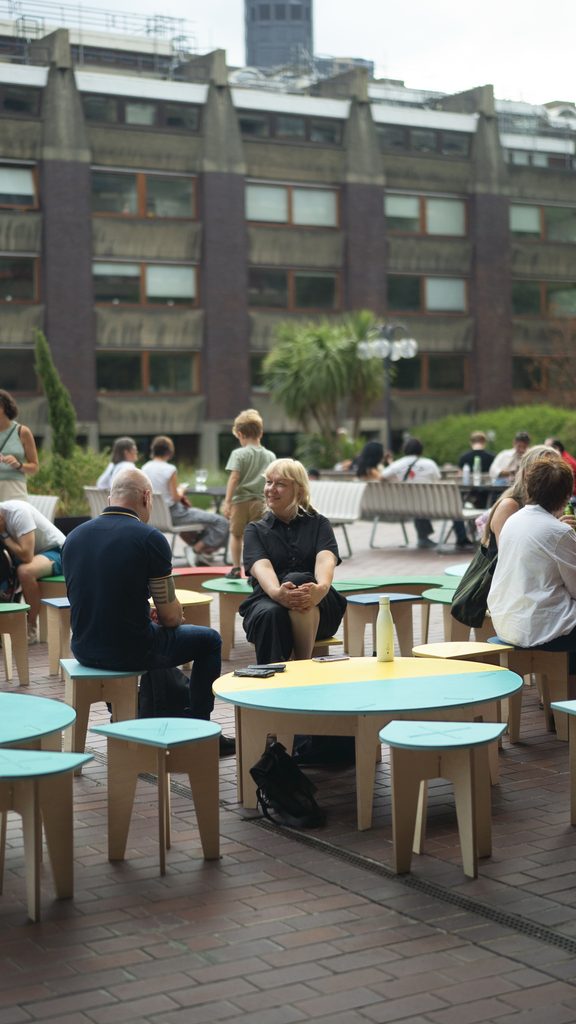
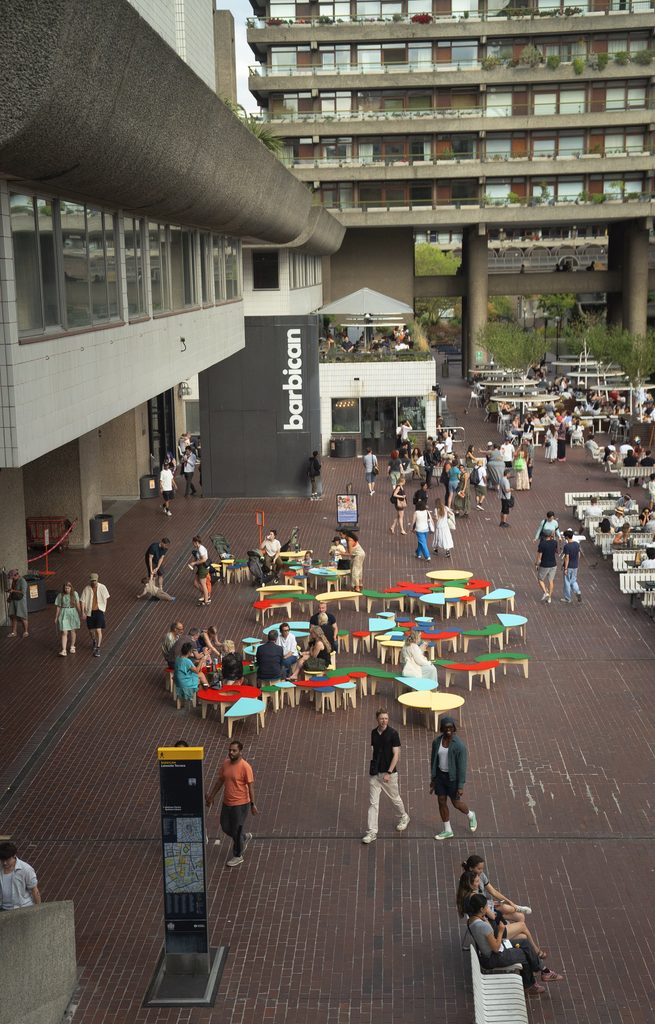
I’ve seen a lot of participatory design installations over the years, and most of them fail for the same reason: they participate for you. They have a predetermined “correct” arrangement that visitors slowly discover through guided cues. There’s no real agency. Raivio’s work is different because it genuinely means it. A seat can become a table. A table can become a platform. A platform can become a wall, a stage, or a privacy screen between two strangers who both needed a quiet corner at the same moment. The work shifts with whoever is using it, and that feels radical compared to what most public design offers.
Ida Torres, Yanko Design
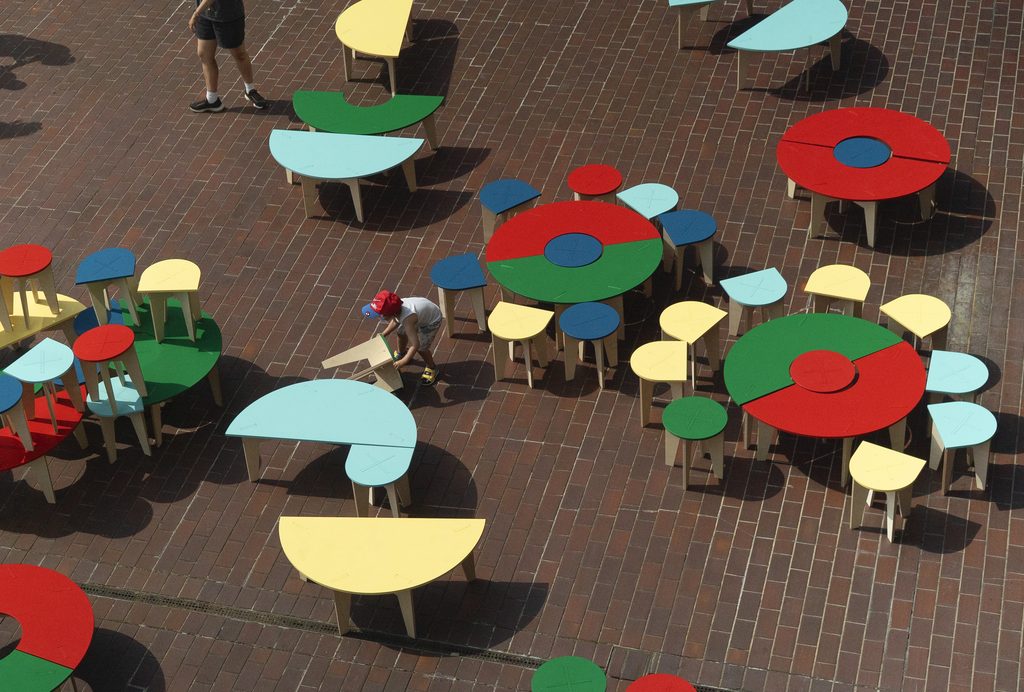
The furniture pieces stay with the Barbican Centre – evolving into different usage, such as events, gatherings and arrangements to social places.
Read more about the work on Finnish Institute in UK and Ireland page
Read the interview of Päivi
In media:
Yanko Design
Frame Magazine
Designboom
Trendhunter